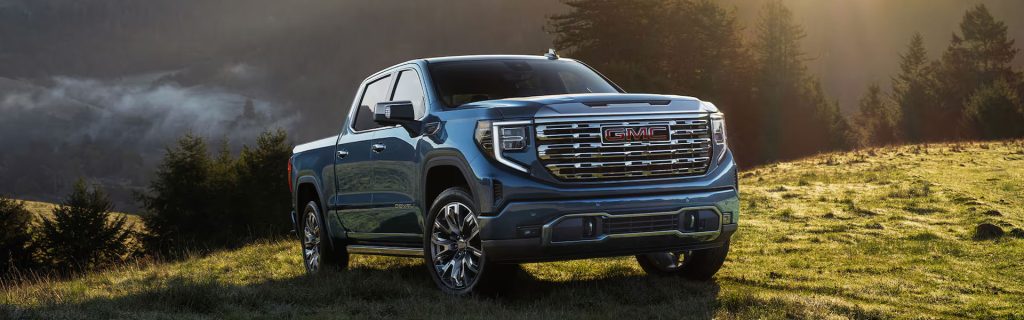
Most truck decisions come down to honesty. Not brand loyalty. Not badge size. Just a clear look at what you do every week around Gillette. Once you answer that, the Canyon and Sierra separate nicely.
Daily Driving Size vs Full Size Presence
Start with where the truck spends most of its time. Canyon fits daily use better. Narrower footprint. Easier parking. Less effort in town and tighter job sites. It feels controlled, not oversized.
Sierra 1500 is a step up in space and road presence. Wider stance. Longer wheelbase. More cabin rooms. You notice it on the highway and when carrying passengers or gear.
Sierra HD moves into a different category. It is built around work first. Size, height, and turning radius all reflect that.
Engine Output and Real-World Capability
Canyon runs the 2.7L TurboMax™ with 310 hp and 430 lbs. ft. of torque. Strong output for a midsize truck. It handles trailers, small equipment, and weekend loads without strain. Max towing reaches around 7,700 lbs. when properly equipped.
Sierra 1500 expands your options. The same 2.7L TurboMax™ is available, though most buyers step into the 5.3L V8 with 355 hp and 383 lbs. ft. of torque or the 6.2L V8 with 420 hp and 460 lbs. ft. of torque. Towing climbs to around 13,200 lbs. depending on configuration.
Sierra HD is where capability becomes the priority. The Duramax® 6.6L turbo diesel V8 delivers 470 hp and 975 lbs. ft. of torque. Properly equipped, towing reaches up to 36,000 lbs. That is not occasional use. That is consistent with heavy load work.
Towing Control and Work Focused Technology
Canyons keep things simple. Trailer sway control. Basic camera views. Enough support for light to moderate towing.
Sierra adds depth. Available MultiPro™ tailgate improves loading access. The vehicle trailering app tracks maintenance, checks connections, and walks through setup. Camera systems provide multiple angles, including hitch views.
Super Cruise® is available on Sierra 1500. Hands free highway driving on compatible roads. For long Wyoming stretches, it reduces fatigue in a measurable way.
Interior Space and Daily Comfort
Canyon interiors are functional and modern. Seating is supportive. Storage is practical. It works for commuting and short trips without feeling stripped down.
Sierra 1500 adds width and rear seat space. Crew cab configurations give adults room to stretch out. Materials improve as you move trims, especially in SLT and Denali.
Sierra HD follows the same layout, though the ride is firmer. It is built to carry weight. Comfort is there, though tuned around capability.
Off Road and Terrain Considerations
Both Canyon and Sierra offer AT4 trims. These bring lifted suspension, skid plates, and 4WD systems tuned for dirt, mud, and uneven terrain.
Canyon AT4X pushes further off road with more focused suspension tuning. Sierra AT4 balances off road ability with towing strength. The choice depends on how far you leave the pavement and how often.
So Which GMC Truck Fits Your Routine
Canyon fits if your week is a mix of commuting, light hauling, and occasional towing. It is easier to live with every day.
Sierra 1500 fits if you need more power, more space, and regular towing without stepping into heavy duty territory.
Sierra HD fits if your work demands serious towing and payload capacity on a consistent basis.
Drive Them Back-to-Back at White’s Frontier Motors
If you are deciding in Gillette, WY, the fastest way to get clarity is seat time. At White’s Frontier Motors, you can move from Canyon to Sierra 1500 to Sierra HD and feel the differences immediately. The right truck makes sense the moment you drive it.

